The Science Behind Night Fishing Lights
Anglers have long utilized artificial light to attract fish, though the exact mechanism behind its effectiveness was once widely misunderstood. While traditional methods like hanging lanterns over the water led many to believe the lights simply attracted insects, modern marine science and lighting technology reveal a far more dynamic process.
How Fishing Lights Work
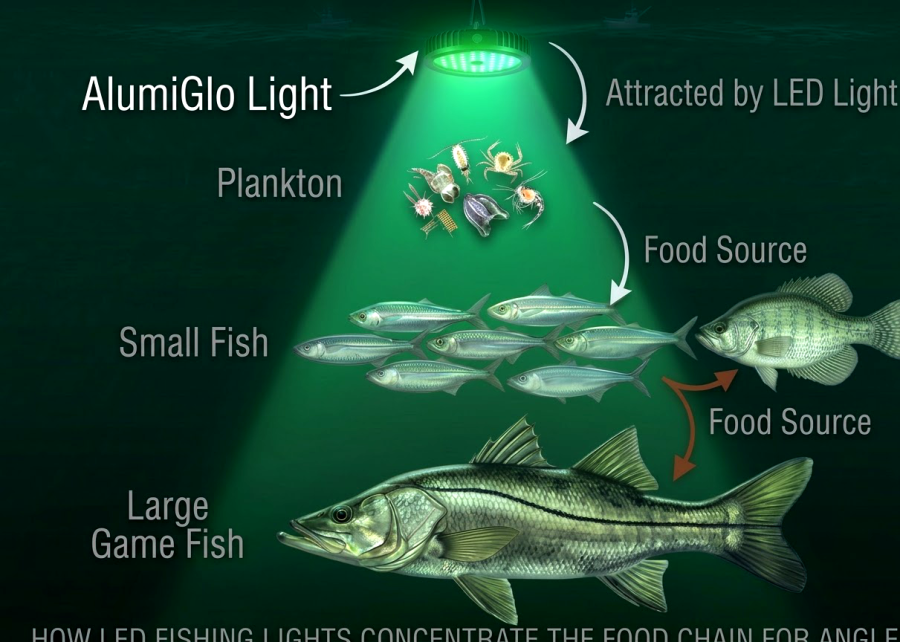
Submersible and surface-mounted lights initiate a natural aquatic food chain:
-
Plankton Attraction: Light projections quickly draw microscopic organisms and plankton to the illuminated area.
-
Baitfish Congregation: Foraging species—such as shad, herring, and minnows—gather to feed on the concentrated plankton, frequently forming dense columns beneath the beam.
-
Game Fish Ambush: Larger predatory game fish track the baitfish, positioning themselves directly below or around the edges of the light field to feed.
Pro Tip for Maximum Results: Give your light approximately 30 minutes to draw in plankton and forage species. If baitfish do not begin congregating within that window, relocate to another spot. Game fish naturally follow the food source, so moving on ensures you focus your time on active water.
Fundamentals for Success
Premium rods, lures, fish finders, and underwater lighting systems are powerful tools that significantly improve your catch rate—provided they are deployed in productive waters. Underwater lights operate on natural fish behavior, which means they enhance an existing fishery rather than create one where fish cannot survive.
Key Requirements for Productive Water
To maximize the effectiveness of your lighting system, your fishing location or dock must feature environment conditions that naturally attract and support game fish:
-
Water Quality: Clean, oxygen-rich water capable of sustaining healthy baitfish and predatory species.
-
Structure & Cover: Nearby drop-offs, pilings, submerged vegetation, or rock formations where fish can ambush prey or seek shelter.
-
Access to Depth: Unobstructed pathways leading to deeper water, allowing fish to move comfortably between feeding and staging areas.
If your dock sits in shallow water lacking structure or healthy aquatic conditions, lighting alone will not convert it into a active fishing spot. However, when installed in waters that naturally host marine life, artificial lighting consistently draws baitfish and game fish directly to your boat or dock.
Fishing From a Boat
Proper Anchoring: The Secret to Effective Light Fishing
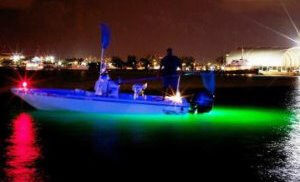
Securing your boat in a fixed position is essential when fishing with underwater or surface lights. For the aquatic food chain to form, lights require stability—drifting motion prevents microscopic organisms and forage species from establishing a concentrated feeding area.
Key Steps for Maximum Stability
-
Eliminate Drift: A stationary boat allows plankton to gather in the light field, which in turn draws baitfish and predatory game fish into a tight zone directly beneath or near your vessel.
-
Use a Two-Anchor System: Deploying a primary bow anchor along with a stern anchor prevents your boat from pivoting or swinging with wind and current.
-
Maintain Position: The more stationary your vessel remains, the faster the food chain develops and the longer game fish will remain suspended in your fishing zone.
Location Strategy: Finding Productive Water
High-performance gear, premium tackle, and advanced lighting systems only work if you deploy them where fish actually live. Whether you are fishing from a boat, targeting from a dock, or dropping lines through the ice, success relies on understanding aquatic habitat—specifically water temperature and underwater structure.
In any body of water, approximately 10% of the area holds 100% of the fish; the remaining expanse is largely dead water. Positioning your setup near key environmental features ensures you are targeting active zones rather than barren water.
Key Underwater Structures to Target
-
Submerged Channels: Submerged creek or riverbeds serve as underwater highways for fish, offering varied depths, cover, and natural forage routes.
-
Points & Drop-Offs: The intersection of a land point and a submerged channel creates an ideal ambush zone. Look for sharp ledges—for instance, where a 10-foot shelf drops quickly into 50 feet.
-
Physical Cover: Brush piles, rock mounds, and bridge pilings provide essential shelter and feeding grounds for both forage and game species.
Practical Depth & Timing Tactics
-
Start at Mid-Depth Ledges: On a steep drop-off, set up initially at a depth of 15 to 25 feet. If action is slow, adjust deeper or shallower in 5-foot increments until you locate holding fish.
-
Monitor Water Quality & Temperature: Forage species thrive in oxygen-rich water with ideal thermal layers (typically 70°F or above for peak activity). Cold or low-oxygen water drastically reduces baitfish congregation around lights.
-
Follow the 30-Minute Rule: Once your lights are deployed, monitor for baitfish activity. If forage species do not begin schooling within 30 minutes, relocate along the channel or structure until you find active water.
Optimal Light Setup: How Many Lights Do You Need on a Boat?
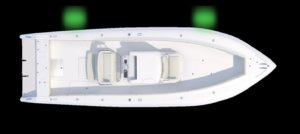
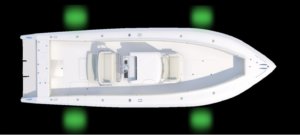
While a single light is sufficient for smaller vessels, deploying two lights spaced 3 to 4 feet apart is the ideal setup for most boats. Spacing out dual lights creates a broader radius of illumination, giving multiple anglers room to fish distinct target zones around the boat.
Benefits of a Two-Light System
-
Expanded Coverage: Creates a wider, continuous beam that draws baitfish from a larger radius.
-
Better Angler Spacing: Allows anglers on board to fish different edges of the light field simultaneously without crossing lines.
-
On-the-Water Color Testing: Using dual lights allows you to run color experiments in real time.
Practical Tip: Testing Light Colors
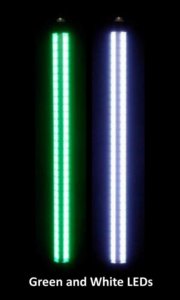
Conditions like water clarity and moon phase dictate whether fish prefer green or white light on any given night. Start your trip by deploying one green light and one white light. Monitor which light attracts higher concentrations of forage species within the first 20–30 minutes, then match both fixtures to the winning color for the rest of the night. Our new SuperBrite X2 DUAL Color lights work great when experimenting.
Dock Lighting: Understanding the Fundamentals
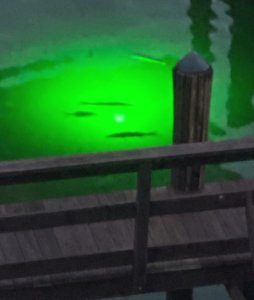
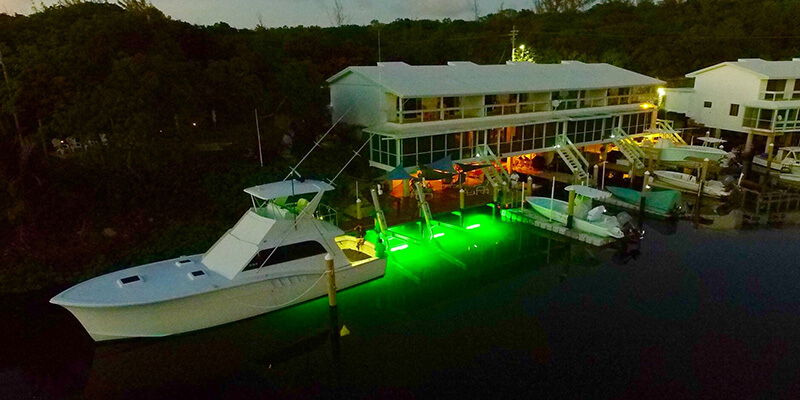
Dock lighting systems are powerful tools for concentrating fish, but they operate within the laws of marine biology rather than magic. Deploying an underwater or surface light initiates a natural aquatic food chain: light draws in microscopic plankton, plankton attracts forage baitfish, and accumulating baitfish draws in larger predatory game fish.
For this chain reaction to occur, your dock must sit in a healthy, hospitable environment. If forage species do not gather, game fish will not follow.
The 7 Key Ingredients for a Productive Dock Fishery
To attract and hold fish consistently, your dock location should offer:
-
Abundant Food: A steady concentration of plankton and forage species.
-
Adequate Depth: Sufficient water column to accommodate feeding and suspended fish.
-
Optimal Temperature: Thermal conditions suited to local game fish and bait populations.
-
High Oxygen Levels: Well-oxygenated water that supports active feeding.
-
Water Movement: Gentle current or flow that delivers nutrients and plankton.
-
Underwater Structure: Pilings, drop-offs, or artificial cover where fish can stage and ambush prey.
-
Deep-Water Access: Unobstructed escape pathways leading to deeper channels.
Consistency is Key: Timing Your Lights
Much like birds returning to a reliable feeder, game fish are creatures of habit that pattern around predictable feeding opportunities. Setting your lights on a consistent schedule conditions local fish to visit your dock nightly.
-
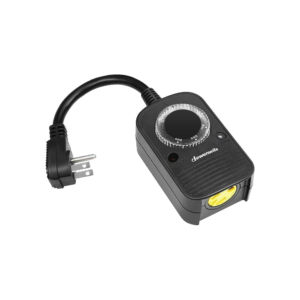
Run Schedule: We recommend using a Photocell Timer to program your lights to turn on automatically at dusk and run for 6 to 8 hours rather than dusk-to-dawn.
-
Creating Urgency: A set illumination window creates a predictable feeding period that conditions game fish to target your dock during peak hours.
-
Maintaining the Routine: Interrupting the light schedule or allowing fuel/timer gaps will cause fish to relocate to neighboring docks with more reliable feeding conditions.
Why Industry Professionals Choose Above-Water Dock Lights
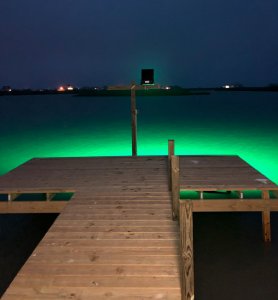
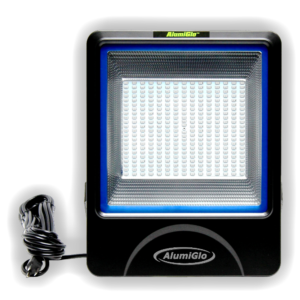
Electrical contractors and commercial dock builders have increasingly transitioned toward above-water lighting systems—such as our DockPro 4500-X3, DockPro 16,000, and DockPro 26,000 series. Overhead fixture setups offer key operational and aesthetic advantages over traditional underwater alternatives:
-
Zero Underwater Maintenance: Mounting fixtures above the waterline eliminates issues with marine growth, algae buildup, and water intrusion, providing years of hassle-free performance.
-
Proven Fish Attraction: Above-water systems project light into the water column just as effectively as submerged units, driving the exact same plankton-and-baitfish food chain reaction.
-
Enhanced Visual Appeal: High-output overhead illumination creates a clean, luxurious glow around your shoreline that elevates nighttime ambiance.
-
Multi-Purpose Illumination: Beyond attracting fish, overhead lights provide functional security and lighting for docks, walkways, boat slips, and docked vessels.

Underwater Dock Lights: Performance vs. Maintenance
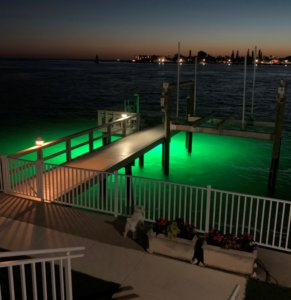
Key Considerations for Underwater Lighting
-
Marine Growth Management: Submerged fixtures naturally attract algae, barnacles, mussels, and other marine organisms. Regular cleaning is necessary to maintain light output and heat dissipation.
-
Environmental Exposure: Submerged units are continuously exposed to acidic saltwater, harsh thermal shifts, and biofouling, making material durability critical.
-
Physical Risks: Bottom-mounted lights are subject to unique hazards, including snagged fishing hooks, shifting sediment, anchor contact, and elevated theft risks compared to secured overhead systems.
Automating Your Dock Light: The Power of a Photocell Timer
To achieve peak results, we strongly recommend pairing your dock light with a photocell timer. This setup automatically activates your light at dusk and turns it off after a user-selected duration (typically 6 to 8 hours).
Why Scheduled Lighting Improves Fishing Results
-
Creates Feeding Predictability: Game fish are highly routine-driven. Setting a fixed lighting schedule conditions fish to anticipate nightly feeding windows, concentrating higher numbers around your dock at peak hours.
-
Prevents Casual Foraging: Leaving lights on from dusk to dawn allows fish to come and go at leisure throughout the night. A defined illumination window creates a sense of urgency that drives active, competitive feeding.
-
Ensures Long-Term Consistency: Automating the run-time ensures your lighting ecosystem remains uninterrupted, keeping local forage and predatory species from migrating to neighboring shorelines.